Landlord & Tenant Rights in Canada
The notice is sitting on the counter and you're not sure it's even valid. Whether you're the tenant who received it or the landlord who has to serve one properly, the rules are provincial and the forms are specific. Select your province for the complete guide to rent increases, eviction notices, deposits, repairs, and tribunal forms.
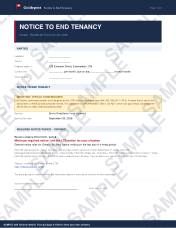
Landlord-tenant guide for your province
$0
Landlord and tenant guide: everything below, plus the checklist as a PDF.
- ✓Notice requirements under your province's law
- ✓Proper serving methods for your province
- ✓What to document before going to the tribunal
- ✓Tenant rights checklist for your province
No account needed
Notice & Documentation Package
$14
Province-specific notice + serving instructions
Answer plain-language questions: we fill everything in and check each detail as you go.
- ✓Everything in free
- ✓Customized notice form
- ✓Serving instructions
- ✓Evidence checklist
- ✓Tribunal filing guide
Helps avoid a notice being struck down on procedural grounds
Get it: $14- Preview
- Pay
- Download instantly


30-day money-back guarantee · No account needed
Instant download
Built by Nathan, nine years in the Canadian Army, paperwork done the hard way first.
Just received an eviction notice and not sure what to do?
Eviction help: start here →Need to get out of a lease early?
Breaking a lease: your options →Ontario
LTB · Rent control applies
British Columbia
RTB · Rent control applies
Alberta
RTDRS · No rent control
Manitoba
RTB · Rent control applies
Saskatchewan
ORT · No rent control
Nova Scotia
RTP · Rent control applies
New Brunswick
TLRO · Rent control applies
Prince Edward Island
IRAC · Rent control applies
Newfoundland & Labrador
RTD · No rent control
Quebec
TAL · Rent control applies
Quick comparison: key rules across Canada
| Province | Rent control | Security deposit | LMR deposit |
|---|---|---|---|
| ON | 2.1% for 2026then 1.9% for 2027 | Not allowed | Allowed |
| BC | 2.3% for 2026 | Half the first month's rent | Not allowed |
| AB | None | One month's rent | Not allowed |
| MB | 1.8% for 2026then 3% for 2027 | Half one month's rent | Not allowed |
| SK | None | One calendar month's rent | Not allowed |
| NS | 5% cap until December 31, 2027 | Half one month's rent | Not allowed |
| NB | 3% per 12 months | One month's rent | Not allowed |
| PE | The Director of Residential Tenancy has set the Annual Allowable Rent Increase, effective January 1, 2026, at 2% on all rental units, heated or unheated, including mobile home sites. The Director of Residential Tenancy has set the Allowable Annual Rent Increase, effective January 1, 2027 at 2.1% on all rental units, heated or unheated, including mobile home sites. | The rent for the rental unit | Not allowed |
| NL | None | Three quarters of the first month's rent | Not allowed |
| QC | 2026 applicable percentages (for notices on or after January 1, 2026): base percentage 3.1%, services of a personal nature 6.7%, capital expenditures 5%. These estimate a reasonable increase for negotiation or TAL fixing; they are not a cap. | Not allowed | Not allowed |
When to get professional help
If you dispute the notice, or the matter is going to a hearing at your provincial tribunal, check the notice against your province’s requirements before the hearing date.
Guidepost is not a law firm. If your situation matches this, consult a lawyer or notary (a Quebec notary in Quebec) before you act.
See how landlord-tenant paperwork compares across provinces → The Canadian Paperwork Index
Related guides
Facts checked October 2026 · Sources: Tribunals Ontario (LTB), BC Residential Tenancy Branch, RTDRS Alberta, TAL Quebec, provincial Residential Tenancy Acts.
More than one unit? The Landlord Pass
Prepare the rent increase notices on this page for every property you hold, with the dates checked against the province rule that governs each one, and an alert when one of them moves.
$16 a month or $149 a year. Single documents stay available without an account.
What the Pass doesDoing this for more than one unit? The Landlord Pass prepares notices for every unit at once on your own letterhead. It is not open yet.
Guidepost is not a law firm. This information is for general informational purposes only. Filing deadlines and procedures can be complex. Always verify with your provincial tribunal before filing. Full disclaimer.