Property
Buying a Home in Canada
This page is the free guide. No sign-in. Read on.
Offer accepted and closing day on the calendar? Start here.
Land transfer tax, closing costs, what a lawyer does, and how to protect yourself, province by province.
Free, on this page
Home buyer's checklist for your province
Home buying guide: everything below, plus the checklist as a PDF.
$0
- Province-specific closing cost breakdown
- Land transfer tax guide for your province
- Step-by-step buying checklist
- What to watch out for in your province
No account needed
2
Is this guide for you?
Open this section ↓•You are purchasing a residential property (house, condo, or co-op) in Canada
•You are buying for personal use, not a commercial development project
•You are working with a mortgage lender or purchasing with cash
Non-Canadian buyers: the federal prohibition on residential purchases by non-Canadians (extended through 2027) may apply. Consult a lawyer before making an offer.
↑ Close this sectionNot legal or financial advice
This guide is for general information. Engage a real estate lawyer or notary before closing on any property.
3
The buying process: step by step
Open this section ↓Mortgage Pre-Approval
Know your budget before you start. Locks in your rate for 90–120 days and signals seriousness to sellers.
Property Search
MLS listings, private sales, and new developments. Guidepost focuses on private home purchases.
Conditional Offer
Subject to financing, home inspection, and review of documents. Never waive conditions blindly.
Home Inspection
Hire a qualified inspector. $400–$700 for potential to discover thousands in issues.
Lawyer / Notary
Required in every province to complete title transfer. Budget $1,000–$2,500 depending on province.
Close & Take Possession
Sign documents, transfer funds via lawyer, and receive keys on closing day.
↑ Close this sectionHome Buyer's Plan (HBP): First-Time Buyers
First-time buyers can withdraw up to $60,000 from their RRSPs tax-free to put toward a home purchase (Budget 2024 update). The withdrawal must be repaid to your RRSP over 15 years. To qualify, you must not have owned a principal residence in the past 4 calendar years. Ask your financial institution about Form T1036.
4
Closing costs to budget for
Beyond the purchase price, buyers typically spend an additional 1.5–4% on closing costs depending on province and property type.Open this section ↓Beyond the purchase price, buyers typically spend an additional 1.5–4% on closing costs depending on province and property type.
↑ Close this sectionCost Typical Range Notes Land Transfer Tax Varies by province Higher rates apply on portions above $3M in BC; additional taxes may apply for non-Canadian buyers. Check your province's land transfer tax or land titles fee Legal Fees $1,000–$2,500 Required in all provinces Title Insurance $200–$400 One-time; strongly recommended Home Inspection $350–$700 Not legally required but essential Property Tax Adjustment Varies Reimburse seller for prepaid taxes Mortgage Setup $0–$500 Some lenders charge appraisal or setup fees Non-Canadian buyersThe federal Prohibition on the Purchase of Residential Property by Non-Canadians Act (extended through 2027) restricts most non-Canadians from purchasing residential property in Canada. Certain exemptions apply. If you are not a Canadian citizen or permanent resident, consult a real estate lawyer before making an offer.1
Your province
Land transfer tax, local legal requirements, and common pitfalls differ significantly by province.Open this section ↓Land transfer tax, local legal requirements, and common pitfalls differ significantly by province.
↑ Close this sectionOntarioONOntario charges Land Transfer Tax (LTT) on a sliding scale: 0.5% up to…
AlbertaABAlberta has no provincial Land Transfer Tax. Instead, Land Titles char…
British ColumbiaBCBC Property Transfer Tax (PTT): 1% on first $200k, 2% on $200k–$2M, 3%…
QuebecQCQuebec's "Welcome Tax" (Droits de mutation immobilière). The provincia…
ManitobaMBManitoba Land Transfer Tax: 0% on first $30k, 0.5% on $30k–$90k, 1% on…
SaskatchewanSKSaskatchewan has no Land Transfer Tax. A Land Title registration fee a…
Nova ScotiaNSNova Scotia has a municipal Deed Transfer Tax set by each municipality…
New BrunswickNBNew Brunswick charges a Real Property Transfer Tax of 1% of the proper…
Prince Edward IslandPEPEI Real Property Transfer Tax: 1% of the greater of purchase price or…
Newfoundland & LabradorNLNewfoundland & Labrador has no Land Transfer Tax. A Registry of Deeds …
5
After you close
Open this section ↓↑ Close this sectionArrange home insurance
Your lender requires proof of insurance before funds are released. Contact your insurer before possession day.
Partner · Guidepost earns a commissionSquare One quotes home and condo insurance online in BC, Alberta, Saskatchewan and Ontario; your lender needs the policy number before funds are released.
Update your address
Notify CRA, your provincial health card office, employer, financial institutions, and Canada Post.
Set up utilities
Transfer electricity, gas, and water accounts to your name starting from possession day.
File HBP or FHSA forms
If you used the Home Buyers' Plan (T1036) or FHSA, file the required CRA forms with your next tax return.
6
Money left in your FHSA at closing
These are the CRA’s published deadlines, so you know which clock you are on.Open this section ↓These are the CRA’s published deadlines, so you know which clock you are on. What to do with the money is a conversation for your bank or an accountant, not for a guide.
↑ Close this sectionI just closed on my home and still have money in my FHSA. Is it too late for a tax-free withdrawal?
Not automatically. The CRA’s rule is that you must not have acquired the qualifying home more than 30 days before making the withdrawal, so a qualifying withdrawal is still possible in the days right after you take ownership. A qualifying withdrawal also requires that you occupy or intend to occupy the qualifying home as your principal place of residence within one year after buying or building it, and it is requested on Form RC725, which goes to your FHSA issuer. Check the CRA page for the full conditions, and talk to your bank or an accountant about your own account.
What happens to money left in my FHSA after that?
Your maximum participation period begins when you open your first FHSA and ends on December 31 of the year in which the earliest of these happens: the 15th anniversary of opening your first FHSA, you turn 71 years of age, or the year following your first qualifying withdrawal from your FHSA. Before that end date, unused funds can be directly transferred on a tax-deferred basis into an RRSP or a RRIF, or withdrawn as taxable income. Which of those suits you is a question for your bank or an accountant.
What if I miss the deadline to close the account?
The accounts lose their status as FHSAs, and the CRA treats the balance as income: the fair market value of the property in your FHSAs at the end of December 31 of that year goes on your income tax and benefit return for that year, and your issuer gives you a T4FHSA slip. The CRA page on closing an FHSA sets out the details.
Done for you
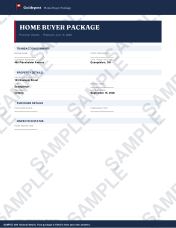
Home Buyer Package$14
- Everything in free
- Offer checklist
- Closing cost worksheet
- Land transfer tax guide
- Step-by-step buyer guide
Closing costs · land transfer tax · buyer checklist
Answer plain-language questions: we fill everything in and check each detail as you go.
Helps avoid unexpected costs or missed buyer steps
- Preview
- Pay
- Download instantly


30-day money-back guarantee · No account needed
Instant download · 30-day money-back guarantee
Built by Nathan, nine years in the Canadian Army, paperwork done the hard way first.
Related guides
Facts checked September 2026 · Sources: Ontario.ca Land Transfer Tax, BC Ministry of Finance PTT, CRA Home Buyers Plan (canada.ca), CMHC.