How to Sell a Car Privately in Ontario (2026)
This page is the free Ontario guide. No sign-in. Read on, or take the checklist as a PDF.
Facts checked September 2026 · See what changed · How we check
Selling a car privately in Ontario takes a few specific steps and the right documents. This guide covers exactly what you need: no jargon, no guesswork.
Ontario at a glance
Checked September 2026- Plates
- Plates stay with you, not with the vehicle.
- Safety certificate
- You do not have to provide one.A Safety Standards Certificate (SSC) is not required to complete the sale, but if you sell without one the buyer cannot put plates on the vehicle until they obtain one themselves. Providing an SSC makes the sale smoother and is standard practice. If provided, it must be issued within the last 36 days or 3,000 km by a licensed inspection station ($80–$135).
- Transfer tax
- Tax is calculated on the sale price or the province's assessed value, whichever is higher.
- Lien search
- Ontario PPSA Search
- Gifting to family
- A gift to a family member is handled differently from a sale.Use Form 1157E (Sworn Statement for a Family Gift of a Used Motor Vehicle). Must be sworn before a Commissioner of Oaths. Limit: one exempt family transfer of the same vehicle per 12 months.
- Vehicle history package
- The mandatory history package also lists liens. The lien search is still the authoritative check.
Source: ServiceOntario
Gifting to a family member? →Selling a boat instead? →
Free, on this page
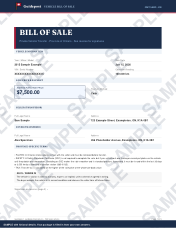
Ontario bill of sale template
Car sale guide: everything below, plus the checklist as a PDF.
Download free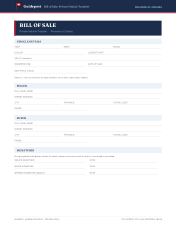
1
What Documents You Need in Ontario
Open this section ↓Bill of Sale
Records the transaction: buyer, seller, vehicle, price, date. Both parties keep a signed copy.
Used Vehicle Information Package (UVIP)
Required in Ontario. Purchase from ServiceOntario for $20. The seller provides it to the buyer. It contains the vehicle's registration history, lien status, and previous damage. The UVIP, explained →
Signed Vehicle Registration Certificate
The seller signs the back of the registration. This is what authorizes the transfer at ServiceOntario.
2
Step-by-Step Transfer Process in Ontario
Purchase a Used Vehicle Information Package (UVIP) from ServiceOntario ($20). You are legally required to provide it to the buyer; failure carries a $140 fine (as of January 2026).Open this section ↓- 1Purchase a Used Vehicle Information Package (UVIP) from ServiceOntario ($20). You are legally required to provide it to the buyer; failure carries a $140 fine (as of January 2026).
- 2Optionally obtain a Safety Standards Certificate from a licensed inspection station ($80–$135). Without one, the buyer must get their own before plating the car.
- 3Complete the bill of sale. Both parties keep a signed copy.
- 4Sign the vehicle portion of the permit (the green ownership document) on the back.
- 5Hand over: signed permit + bill of sale + UVIP + SSC (if obtained).
- 6Remove your licence plates before the buyer drives away. Plates stay with you in Ontario.
Ontario-specific things to know
- •Plates belong to the seller. Never leave your plates on the car.
- •Transfer tax (RST) is on the higher of the sale price or Canadian Red Book wholesale value. Understating the price saves the buyer nothing.
- •Outstanding lien? You must pay it out and obtain a lien release before ownership can transfer.
- •As of January 2026, the fine for failing to provide a valid UVIP is $140.
Gifting to a family member?
Use Form 1157E (Sworn Statement for a Family Gift of a Used Motor Vehicle). Must be sworn before a Commissioner of Oaths. Limit: one exempt family transfer of the same vehicle per 12 months.
↑ Close this sectionSelling a boat instead?
Boats follow federal Transport Canada paperwork plus Ontario's RST rules, a different process from cars.
How to sell a boat in Ontario →3
Common Questions
Do I need a safety certificate to sell my car in Ontario?Open this section ↓↑ Close this sectionDo I need a safety certificate to sell my car in Ontario?
No. Ontario does not require a safety inspection for private vehicle sales. The vehicle can be sold as-is.
What happens if there's a lien on the vehicle?
If you have an outstanding loan on the vehicle, you must pay it off and obtain a lien release before transferring ownership. Selling a vehicle with an undisclosed lien is illegal and exposes you to serious liability. You can check for liens using the Ontario PPSA Search.
How do I handle payment safely?
Bank drafts and certified cheques are safest for large amounts. They cannot bounce. For e-transfer, confirm the funds have arrived in your account before signing anything. Never hand over keys until payment is fully cleared and in your possession.
How is transfer tax calculated in Ontario?
In Ontario, transfer tax is calculated on the higher of the actual sale price or the average wholesale book value. Understating the price to save on tax is illegal and won't work. The registry checks the book value.
When you are ready
Bill of Sale & transfer package$12
- Province-correct · built for registry requirements · disclosures covered
- Helps avoid a rejected transfer or missing disclosure
Everything in the package, plus Sign Together: your buyer signs online through a secure private link
Instant download · 30-day money-back guarantee
Built by Nathan, nine years in the Canadian Army, paperwork done the hard way first.
Private Car Sale Package with Sign Together
$19Both of you sign online from your own devices, through a secure private link, and neither of you creates an account.
Sign it together insteadCheck for liens before you buy
Run a PPSA lien search before finalizing any purchase. It takes 5 minutes and can save you from inheriting someone else's debt.
Search Ontario PPSA Search →Sources and other provinces
Official sources
- ServiceOntario: https://www.ontario.ca/page/buy-or-sell-used-vehicle-ontario
- Ontario PPSA Search: https://www.ontario.ca/page/register-security-interest-or-search-lien-access-now
Facts checked September 2026
Also see: selling a car in other provinces
Informational guide only. Guidepost is not a law firm. This guide explains the typical process and is not legal advice. Requirements can change. Verify current rules with the relevant government authority or a qualified professional before you act.