Small Claims Court in Alberta (2026)
This page is the free Alberta guide. No sign-in. Read on, or take the checklist as a PDF.
Facts checked October 2026 · See what changed · How we check
File a claim for up to $100,000 in Alberta without a lawyer. Here's exactly what to do, step by step.
Alberta small claims guide
Keep it with the rest. This one files behind tab 12 of the Home File.
1
Alberta Small Claims: Key Facts
Open this section ↓↑ Close this sectionCourt
Alberta Court of Justice (Civil Claims, formerly Small Claims)
Claim limit
$100,000: Alberta's Civil Claim (formerly Small Claims) limit is $100,000.
Filing fee
$100 for claims up to and including $7,500; $200 for claims over $7,500 up to $100,000
Starting form
Civil Claim CTS1461 (Alberta Court of Justice, Civil)
How to file
File a Civil Claim (formerly "Small Claims") at the Alberta Court of Justice. The limit is $100,000. File at the courthouse nearest the defendant.
Serving the defendant
Defendant must be personally served. Substituted service (by mail or on a third party) requires court permission. Affidavit of Service must be filed.
2
Step-by-Step: Filing in Alberta
Open this section ↓- 1
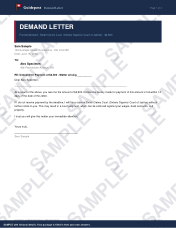
Send a demand letter to the defendant with a reasonable deadline.
- 2
Gather your evidence: contracts, receipts, photos, emails, text messages.
- 3
Complete the Civil Claim form at the Alberta Court of Justice.
- 4
File and pay the filing fee.
- 5
Serve the defendant personally and file an Affidavit of Service.
- 6
Attend the hearing. Present your evidence calmly and factually.
- 7
Receive the court's decision.
- 8
If defendant doesn't pay, use enforcement mechanisms (garnishment, writ).
- 1
3
What Happens at the Hearing
Provincial Court Civil Claim hearings are informal.Open this section ↓Provincial Court Civil Claim hearings are informal. Both parties present their evidence; the judge asks questions. No formal rules of evidence apply.
After You Win: Collecting Your Judgment
After judgment, enforcement options include: Writ of Enforcement (to seize property), garnishment of wages or bank accounts, Civil Enforcement Agency.
If the Defendant Counterclaims
Defendant can file a Dispute Note with a counterclaim. A counterclaim above the court's limit goes to the higher court; check the rules.
↑ Close this sectionAlberta-specific things to know
- •Alberta's Civil Claim limit is $100,000.
- •2-year limitation period from when you knew or should have known of the claim.
- •Both parties can bring a support person but not a lawyer advocate in most cases.
- •Witnesses can be subpoenaed to appear at the hearing.
4
Common Questions
Do I need a lawyer for small claims in Alberta?Open this section ↓Do I need a lawyer for small claims in Alberta?
No. Small Claims Court is designed for self-represented litigants. You may bring a lawyer if you choose, but it's usually not cost-effective for smaller claims. Most people represent themselves.
What if my claim is more than $100,000?
You can either waive the amount above $100,000 and file in Small Claims Court, or file in a higher court (Superior/Queen's Bench/Court of King's Bench) where lawyers are typically needed and the process is more formal and expensive.
How long do I have to file? (Limitation period)
Most claims in Alberta must be filed within 2 years of when you knew or reasonably should have known about the issue. Check your specific situation, some claims have shorter deadlines.
What if the defendant doesn't show up?
If the defendant was properly served and doesn't appear, the court will typically proceed and you may receive a default judgment in your favour. You still need to present your evidence.
Official sources
Facts checked October 2026
The form that starts it, explained
↑ Close this sectionSmall claims in other provinces
Done for you
Small Claims Package$14
- Demand letter
- Claim summary worksheet
- Evidence checklist
- Post-judgment collection guide
Demand letter + claim worksheet + filing guide
Instant download · 30-day money-back guarantee
Built by Nathan, nine years in the Canadian Army, paperwork done the hard way first.
Informational guide only. Guidepost is not a law firm. This guide explains the typical process and is not legal advice. Requirements can change. Verify current rules with the relevant government authority or a qualified professional before you act.