Got an Eviction Notice in Saskatchewan?
This page is the free Saskatchewan guide. No sign-in. Read on, or take the checklist as a PDF.
Facts checked September 2026 · See what changed · How we check
A notice is not an eviction order. You have rights and you have options. Here’s what to do next.
Free, on this page
Saskatchewan tenant rights checklist
Eviction guide: everything below, plus the checklist as a PDF.
$0
- Valid grounds for eviction in Saskatchewan
- Notice periods your landlord must provide
- Your right to dispute at the Saskatchewan tribunal
- What to document if you contest the notice
Free. General information only, not legal or regulatory advice.
Keep it with the rest. This one files behind tab 12 of the Home File.
No account needed
What does the notice say?
Select the reason stated on the notice you received.
Not a law firm. This is general information, not legal advice.
The most important thing to know:
In Saskatchewan, a landlord cannot legally remove you from your home based on a notice alone. They must apply to the Office of Residential Tenancies (ORT), attend a hearing, and receive a formal eviction order. Only then can enforcement action begin. Receiving a notice starts a process, it does not end one.
1
Typical Notice Periods by Reason in Saskatchewan (2026)
Open this section ↓These are the standard minimum notice periods. Your specific notice must match the required period for the reason stated. Verify your notice at https://www.saskatchewan.ca/government/government-structure/boards-commissions-and-agencies/office-of-residential-tenancies.
Non-payment of rentimmediate notice once 15 days in arrearsLandlord's own use / sale2 monthsEnd of fixed term1 monthDamage / conduct / cause1 month (serious cases: ORT hearing, no set notice)Source: The Residential Tenancies Act, 2006. Verified June 2026.
↑ Close this sectionImportant: dispute deadlines are shorter than notice periods
In Saskatchewan, apply through the ORT online portal ($50 filing fee). If you receive a landlord’s notice for cause, end of employment, or the landlord’s own use, you must dispute it by giving the landlord written notice within 15 days of receiving it: otherwise you are deemed to have accepted that the tenancy ends and must move out. (A non-payment notice under s.57 has no 15-day step; the landlord applies to the ORT for an order of possession.) Act quickly: contact the ORT as soon as you receive any notice so you are prepared for the hearing.
2
What to Do After Receiving a Notice
Open this section ↓1. Read the notice carefully
Check the reason stated, the effective date, and the form used. In Saskatchewan, specific forms are required for specific reasons, a wrong form may make the notice invalid. Note whether it was served correctly (delivery method and timing).
2. Do not move out or sign anything yet
Moving out or signing a mutual-termination agreement may be treated as voluntary departure, forfeiting your right to dispute. Do not agree to vacate until you fully understand your options.
3. Understand your options
Depending on the reason: (a) Non-payment: you can usually void the notice by paying all overdue rent before the deadline. (b) Landlord's own use: you may be able to dispute if you believe the stated reason is in bad faith. (c) Conduct or damage: you may have an opportunity to remedy the issue within the notice period. (d) Any reason: you can file a dispute at the ORT within the response period.
4. Gather your documentation
Collect your signed lease, rent payment receipts (especially bank records), all written communications with your landlord, and photos of the unit condition. This evidence is critical if you dispute.
5. Contact the tribunal or a tenant advocate
The Office of Residential Tenancies at https://www.saskatchewan.ca/government/government-structure/boards-commissions-and-agencies/office-of-residential-tenancies can explain your rights and the process. Many provinces have free tenant legal aid clinics and advocacy services. You do not need a lawyer to file a dispute.
↑ Close this sectionIllegal eviction actions in Saskatchewan
It is illegal for a landlord to change your locks, remove your belongings, shut off utilities, or interfere with your right to enter the property, even if a valid notice has been served. These are called “self-help evictions” and are prohibited under the The Residential Tenancies Act, 2006. If this happens to you, contact the ORT immediately, emergency applications may be available.
3
Where to Get Help in Saskatchewan
Open this section ↓↑ Close this sectionOffice of Residential Tenancies (ORT)
https://www.saskatchewan.ca/government/government-structure/boards-commissions-and-agencies/office-of-residential-tenanciesFiling fee: $50 for most applications
Legislation: The Residential Tenancies Act, 2006
4
Common Questions
Does an eviction notice mean I have to leave?Open this section ↓Does an eviction notice mean I have to leave?
No. A notice starts a process. Your landlord must apply to the ORT, attend a hearing, and receive a formal order. You can dispute the notice and continue living in your home while the process plays out.
Can my landlord change the locks or remove my belongings?
No. This is illegal in Saskatchewan regardless of whether a notice has been served. Changing the locks, removing belongings, or cutting utilities is a self-help eviction and is prohibited under the The Residential Tenancies Act, 2006. Contact the ORT immediately if this happens.
What if I can't afford to pay the overdue rent?
Contact your landlord to discuss a payment plan. Many landlords will negotiate rather than go through a tribunal process. If your landlord files at the ORT, you can still propose a payment agreement at the hearing. Community organizations and provincial social services may also offer emergency rental assistance.
How do I file a dispute at the ORT?
Visit https://www.saskatchewan.ca/government/government-structure/boards-commissions-and-agencies/office-of-residential-tenancies for the current forms and process. There is a filing fee of $50 for most applications. Gather your evidence (lease, payment records, correspondence, photos) before filing.
Guidepost is not a law firm. This page provides general information about eviction procedures in Saskatchewan, it is not legal advice about your specific situation. Notice periods and procedures can change; always verify current rules at https://www.saskatchewan.ca/government/government-structure/boards-commissions-and-agencies/office-of-residential-tenancies or with a qualified legal professional. Full disclaimer.
Facts checked September 2026
Facing a specific problem?
↑ Close this sectionAlso see
Done for you
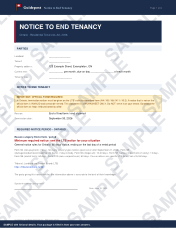
Notice & Documentation Package$14
- Everything in free
- Customized notice form
- Serving instructions
- Evidence checklist
- Tribunal filing guide
Province-specific notice + serving instructions
Answer plain-language questions: we fill everything in and check each detail as you go.
Helps avoid a notice being struck down on procedural grounds
- Preview
- Pay
- Download instantly





30-day money-back guarantee · No account needed
Instant download · 30-day money-back guarantee
Built by Nathan, nine years in the Canadian Army, paperwork done the hard way first.
Informational guide only. Guidepost is not a law firm. This guide explains the typical process and is not legal advice. Requirements can change. Verify current rules with the relevant government authority or a qualified professional before you act.