Just Terminated in Alberta?
This page is the free Alberta guide. No sign-in. Read on, or take the checklist as a PDF.
Facts checked September 2026 · See what changed · How we check
“Without cause” does not mean without compensation. Here’s what you’re typically owed and what to do before signing anything.
Free, on this page
Alberta termination rights checklist
Termination guide: everything below, plus the checklist as a PDF.
$0
- Your minimum notice entitlement in Alberta
- What to check on your last pay stub and ROE
- EI application timeline after termination
- When to consult an employment lawyer
Free. General information only, not legal or regulatory advice.
Keep it with the rest. This one files behind tab 9 of the Home File.
No account needed
What happened?
Select the option that best describes your situation.
Not a law firm. This is general information, not legal advice.
Federally regulated employee? Read this first ▸
FEDERALLY REGULATED? If you work for a bank, telecommunications or broadcasting company, an airline, interprovincial or international transport/trucking, a federal Crown corporation, or another federally regulated industry, you are covered by the Canada Labour Code, NOT your provincial Employment Standards Act. Federal notice and severance rules are different, and federally regulated employees with 12+ months of service have an unjust-dismissal remedy that can include reinstatement. The provincial figures shown here do not apply to you. See canada.ca for the Canada Labour Code standards.
The most important thing to know:
In Alberta, employers can terminate without cause, but they must provide notice or pay in lieu. The statutory minimums under the Employment Standards Code (Alberta) are a floor, not a ceiling. Common law reasonable notice is often significantly higher, especially for employees with longer tenure or senior roles. Do not sign a release until you understand your full entitlements.
1
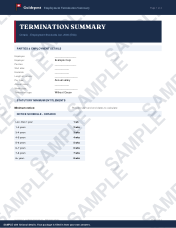
Minimum Notice Entitlements in Alberta (2026)
Open this section ↓Under the Employment Standards Code (Alberta). These are statutory minimums; common law entitlements are typically higher.
90 days–2 years1 week2–4 years2 weeks4–6 years4 weeks6–8 years5 weeks8–10 years6 weeks10+ years8 weeksNo minimum notice for employees with less than 90 days of service. Notice can be provided as working notice or pay in lieu.
↑ Close this section2
What to Do Right Now
Open this section ↓1. Apply for EI at canada.ca immediately
Apply right away: applying more than 4 weeks after your last day of work can cost you benefits. The usual 1-week waiting period is waived for claims starting by October 9, 2027. You will need your ROE; if your employer has not issued it within 5 calendar days, request it in writing.
2. Do NOT sign any release or settlement yet
A full-and-final release permanently bars future claims. Compare any offer against your Employment Standards Code (Alberta) minimums first. If you have significant tenure, a free consultation with an employment lawyer costs nothing and may recover substantially more.
3. Review your employment contract
Check for a termination clause: it may specify what you may be entitled to. Alberta courts regularly void poorly drafted clauses that fail to meet Employment Standards Code (Alberta) minimums. A signed contract does not always limit your entitlements.
4. Document everything
Collect your employment contract, termination letter, pay stubs, performance reviews, and any communications with your employer. These are essential if you pursue a wrongful dismissal claim.
5. File an ESA complaint if minimums are not met (free)
If your employer has not met the Employment Standards Code (Alberta) minimums, you can file a complaint with the Alberta employment standards branch at no cost, no lawyer required. This is separate from a civil wrongful dismissal claim.
↑ Close this sectionIf your employer claims just cause
Just cause under Alberta's Employment Standards Code requires proof of serious, documented misconduct: theft, fraud, harassment, repeated insubordination, or a willful breach of fundamental employment duties. Alberta courts apply a contextual approach: the misconduct must be proportionate to the sanction of immediate dismissal. Minor or isolated incidents, poor performance without a documented progressive discipline record, and character concerns alone typically do not constitute just cause. The employer bears the full burden of proof.
If the employer cannot prove just cause, the employer generally owes the same minimum notice and pay under the legislation as a without-cause termination. Get legal advice before accepting a cause determination.
3
Constructive Dismissal in Alberta
A substantial unilateral change to a fundamental employment term (a significant pay reduction, demotion, forced relocation, or a hostile work environment) may entitle you to resign and claim constructive dismissal.Open this section ↓↑ Close this sectionA substantial unilateral change to a fundamental employment term (a significant pay reduction, demotion, forced relocation, or a hostile work environment) may entitle you to resign and claim constructive dismissal. Act promptly; accepting the new terms without objection for an extended period may bar the claim. Seek legal advice before resigning.
4
Common Questions
What is the difference between notice pay and severance pay?Open this section ↓What is the difference between notice pay and severance pay?
Notice pay (or pay in lieu of notice) compensates you for the notice period you did not receive, every province requires some minimum. Severance pay is a separate, additional amount, but Alberta does not have statutory severance. Common law wrongful dismissal damages can supplement or replace both, and are typically higher.
How long do I have to make a claim?
In Alberta, civil wrongful dismissal claims generally have a 2-year limitation period from the termination date. ESA / employment standards complaints typically have a shorter window (often 12 months from the date the wages were due). Do not delay: limitation periods are strict.
Do I have to accept a severance offer?
No. You can negotiate. Employers typically offer the minimum, or sometimes less. If your offer exceeds the statutory minimum, compare it to common law reasonable notice (typically 1–2 months per year of service for mid-to-senior roles). Most employment lawyers offer a free initial consultation, and many take cases on contingency.
I was told it was for cause. What now?
You do not have to accept a for-cause characterization at face value. Cause is a high legal bar. Request the specific reasons in writing. If cause is not proven, the employer generally owes the same statutory minimums as a without-cause termination. Consult an employment lawyer before responding to or accepting a for-cause dismissal.
Official sources
Facts checked September 2026
Guidepost is not a law firm. This page provides general information about employment termination in Alberta, it is not legal advice about your specific situation. Employment laws change; always verify current rules at the official sources above or with a qualified employment lawyer. Full disclaimer.
↑ Close this sectionAlso see
Done for you
Employment Rights Package$14
- Everything in free
- Statutory notice minimums (ESA minimum notice + severance where applicable)
- Employee rights summary for your province
- Sample termination letter (reference: what your employer should give you)
- What to do next: checklist (EI, ROE, legal options)
Statutory notice minimums worksheet for your province
Answer plain-language questions: we fill everything in and check each detail as you go.
Helps you understand your rights before signing any release
- Preview
- Pay
- Download instantly





30-day money-back guarantee · No account needed
Instant download · 30-day money-back guarantee
Built by Nathan, nine years in the Canadian Army, paperwork done the hard way first.
Informational guide only. Guidepost is not a law firm. This guide explains the typical process and is not legal advice. Requirements can change. Verify current rules with the relevant government authority or a qualified professional before you act.