How to Sell Your Home Privately in New Brunswick (2026)
This page is the free New Brunswick guide. No sign-in. Read on, or take the checklist as a PDF.
Facts checked September 2026 · See what changed · How we check
New Brunswick seller's checklist
Keep it with the rest. This one files behind tab 3 of the Home File.
Selling privately in New Brunswick can save you tens of thousands in agent commissions. This guide covers exactly what documents you need, what you're required to disclose, and how the closing process works, step by step.
1
Land Transfer Tax in New Brunswick
Open this section ↓↑ Close this sectionNew Brunswick charges a Land Transfer Tax of 1% of the property value (assessed value or purchase price, whichever is higher).
Example on a $500,000 home: On a $500,000 home: $5,000 Land Transfer Tax (if assessed at $500k or less).2
Closing Professional in New Brunswick
Open this section ↓↑ Close this sectionLReal estate lawyer required
A real estate lawyer is required for title transfer in New Brunswick.
3
Where Title Is Registered in New Brunswick
Your lawyer registers the transfer with the Service NB Land Registry.Open this section ↓Your lawyer registers the transfer with the Service NB Land Registry. NB uses a hybrid Registry of Deeds and Land Titles system. Your lawyer will advise on which applies to your property.
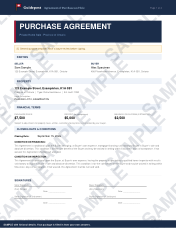
Service NB Land Registry →Purchase agreement (APS): There is no free government Agreement of Purchase and Sale form in Canada: the contract is either a real-estate-board form (copyright / member-licensed) or a lawyer-drafted document. Guidepost's package provides the purchase agreement template for private sales.↑ Close this section4
Disclosure Requirements in New Brunswick
Open this section ↓VOLUNTARYResidential Property Disclosure Statement (RPDS) + Radon Disclosure Document
Not required by provincial statute. NBREA (New Brunswick Real Estate Association) policy requires the RPDS for transactions involving licensed REALTORS. Notably, NBREA also requires a separate Radon Disclosure document, unique in Canada, which explains radon, its presence and health risks, and requires buyer acknowledgment. Exceptions: estate sales and rental investment properties. FSBO sellers are not required to complete these forms but carry common-law latent defect obligations.
This form covers:
- •Water supply (well/municipal) and sewage disposal (septic/municipal)
- •Electrical system condition
- •Plumbing system condition
- •Heating system type and condition
- •Structural condition
- •Mechanical systems
- •Zoning compliance and permits
- •Environmental issues
- •Neighbourhood information (known issues)
- •Upgrades and past defects
- •Radon (separate Radon Disclosure document: NBREA requirement unique to NB)
New Brunswick sellers working with REALTORS must complete the Residential Property Disclosure Statement (RPDS) and a separate Radon Disclosure document. New Brunswick is currently the only province with a mandatory stand-alone radon disclosure requirement for brokered transactions. The RPDS is not required for FSBO transactions, but common-law obligations to disclose known latent defects apply to all sellers. NB Land Transfer Tax is calculated on the higher of the purchase price or assessed value. If the assessment is high relative to your sale price, buyers pay more than expected. Deaths on property are not required to be disclosed in New Brunswick.
↑ Close this section5
New Brunswick-Specific Requirements
Open this section ↓- !
A survey or title insurance is typically required by lenders.
- !
New Brunswick's Land Transfer Tax is charged on the higher of the purchase price or the property's assessed value. If assessed value exceeds the sale price, buyers pay LTT on the assessed value.
↑ Close this sectionSelling a Condo or Strata Unit?
Request condo corporation documents including reserve fund study and financials.
- !
6
Inclusions and Exclusions
Every purchase agreement must clearly state what stays with the property and what the seller is taking.Open this section ↓Every purchase agreement must clearly state what stays with the property and what the seller is taking. Disputes over inclusions are one of the most common sources of post-closing complaints in Canadian real estate. When in doubt, write it in.
Typically included (stay with the property)
- ✓Built-in appliances (dishwasher, built-in oven/microwave)
- ✓Light fixtures (ceiling, pot lights, chandeliers)
- ✓Window coverings attached to a rod or track (blinds, shutters)
- ✓Central vacuum system and attachments
- ✓Garage door openers and remotes
- ✓Built-in shelving and storage systems
- ✓Permanently installed ceiling fans
- ✓Alarm and security systems (owned, not monitored contract)
- ✓Intercom systems
- ✓Water softener (if owned and plumbed in)
- ✓In-ground sprinkler systems
- ✓Permanently attached outdoor structures (gazebo on concrete pad)
- ✓Fireplace inserts and gas fireplaces (if plumbed in)
Typically excluded (seller takes these)
- ✗Freestanding fridge, stove, washer, dryer (unless listed in the agreement)
- ✗Portable dishwasher
- ✗Chest freezer or bar fridge
- ✗Above-ground pool and equipment
- ✗Hot tub or spa (if not permanently plumbed)
- ✗Portable or window A/C units
- ✗Decorative light fixtures the seller wants to keep
- ✗Curtains and drapes (freestanding rods often excluded)
- ✗Freestanding shelving or storage units
- ✗EV charging equipment (if portable)
- ✗Outdoor furniture, planters, garden statues
- ✗Firewood, propane tanks
- ✗TV wall mounts (disputed, specify either way)
Rented items: Water heaters, furnaces, alarm systems, and solar panels are often rented, not owned. Rental contracts typically transfer to the buyer. List all rental items in the agreement and disclose the monthly cost and contract terms.↑ Close this section7
Step-by-Step: Selling Privately in New Brunswick
Open this section ↓- 1Hire a real estate lawyer.
- 2Complete the Residential Property Disclosure Statement (RPDS) and Radon Disclosure document.
- 3Accept offer and have your lawyer review the agreement.
- 4Arrange mortgage discharge if applicable.
- 5Closing: title registered, proceeds disbursed, keys handed over.
↑ Close this sectionNew Brunswick-specific things to know
- •Land Transfer Tax is on the higher of purchase price or assessed value. If assessment is high relative to sale price, buyers pay more.
- •NB is the only province requiring a separate radon disclosure document in brokered transactions.
8
Key Terms in the Purchase Agreement
Open this section ↓↑ Close this sectionIrrevocable period
The window during which a submitted offer cannot be withdrawn by the buyer, typically 24–48 hours. Once it lapses without acceptance, the offer is void. Sellers can counter-propose within this period, which resets the irrevocable clock.
Deposit vs. down payment
No deposit is legally required. BCFSA, British Columbia's real estate regulator, states it plainly: "There is no legal requirement for a money deposit", and a deposit is not needed to make the contract binding. It is a negotiated term, not a rule. On amount, the one figure published by a regulator is BCFSA's: five to 10 per cent of the purchase price is typical, and any amount can be negotiated between a buyer and seller. Read that as what it is, a BC regulator describing transactions that have agents in them. There is no national figure and no published private-sale figure. Deposit and down payment are not the same thing, and the published sources answer two different questions about where it lands: BCFSA says that once the deal completes the deposit is added to the rest of your down payment, while Quebec's OACIQ form says the deposit is credited against the purchase price. Either way it counts toward what the buyer already owes, rather than being money on top. What happens to it if the deal collapses depends entirely on the contract. The Ontario Court of Appeal puts it as: a deposit is forfeit if the purchaser refuses to close the transaction, unless the parties bargained to the contrary (Benedetto, 2019 ONCA 149). BCFSA says the same thing in its own words, that it will depend entirely on what was agreed to in your contract. So set the release terms out in the agreement rather than relying on a default.
Who holds the deposit, and what does not protect it
Who holds the deposit is negotiable between buyer and seller, and BCFSA's published best practice is that it be held in trust with a receipt, precisely because a trust account protects the funds if there is later a dispute. That is best practice, not a description of what happens automatically. The protections most people assume are attached to a deposit are triggered by a licensed brokerage, and a private sale has none of them: in BC a brokerage holds deposit money as a stakeholder and not as agent for one of the parties, in Ontario every brokerage must keep a trust account and pay into it all money that comes into its hands in trust, RECO's insurance responds to brokerage theft, fraud, insolvency and misappropriation up to $200,000 per claim, and Alberta and Quebec impose the equivalent. With no brokerage in your sale there is no statutory stakeholder, no brokerage trust duty, and no RECO deposit insurance. In Ontario that gap is structural rather than accidental: someone trading in respect of their own interest in real estate is exempt from the Act, so the brokerage trust duty never reaches a private seller in the first place. What is NOT true is that a private party is barred from holding the money. No province we checked prohibits it, and BC regulates receiving deposit money only where it is done for remuneration, so an unpaid friend holding funds is not caught. A lawyer or notary can hold it, with one real limit worth knowing before you ask: law society rules in Ontario, BC and Alberta require a lawyer who receives trust money to pay it into a pooled trust account, but those same rules, following the Federation of Law Societies national rule, restrict trust accounts to money directly related to legal services the firm is actually providing. A lawyer cannot be used as a bare neutral escrow with no retainer. That limit is verified for Ontario, BC and Alberta; we have not verified the other provinces. The practical step is to agree in writing who holds the deposit and on what terms it is released, and to get a receipt. BCFSA's own advice, where a deposit is to be held by someone other than a brokerage, is to obtain independent legal advice.
Condition on financing
The sale is conditional on the buyer obtaining mortgage approval, typically within 5–10 business days. If financing falls through, the buyer can withdraw and recover the deposit. Sellers should not remove the property from the market until all conditions are waived.
Condition on home inspection
The sale is conditional on a satisfactory home inspection, typically within 5–7 business days. If the buyer is not satisfied with the inspection results, they can withdraw. In competitive markets, buyers sometimes waive this. You cannot require them to, but you can negotiate the timeline.
Closing adjustments
Property taxes, condo fees, utility bills, and prepaid rents are prorated as of the closing date. The seller pays for the period up to and including closing; the buyer pays from the day after. Your lawyer prepares a Statement of Adjustments. Typical adjustments add or subtract $500–$3,000 depending on the time of year.
"As-is" clause
States the buyer accepts the property in current condition. This does NOT protect sellers from liability for known latent defects. Courts across Canada have consistently held that deliberate concealment of a known defect is fraud, which survives any "as-is" clause. It may limit claims for patent (visible) defects the buyer could have discovered through reasonable inspection.
Latent vs. patent defect
A latent (hidden) defect cannot be discovered through reasonable inspection, for example, foundation cracks behind drywall, water infiltration hidden by fresh paint, or contaminated soil. Sellers must disclose known latent defects. A patent defect is visible or discoverable: peeling paint, a broken window, visible water stains. Patent defects are generally the buyer's responsibility to discover.
Time is of the essence
Standard clause in Canadian purchase agreements. All specified dates (offer deadline, condition removal, closing) are strict. Missing them can allow the non-defaulting party to terminate the agreement or claim damages.
9
Common Questions
Do I need a real estate agent to sell my home in New Brunswick?Open this section ↓Do I need a real estate agent to sell my home in New Brunswick?
No. You have the legal right to sell your home privately without an agent. You will still need a real estate lawyer to handle the title transfer and closing. Guidepost provides the pre-closing documents: the purchase agreement, disclosure statement, and related paperwork.
How much does it cost to sell privately vs. using an agent?
Real estate commissions may be negotiable, but typically range from 2% to 6% of the sale price, depending on your location (Financial Consumer Agency of Canada). No Canadian law sets the rate. Selling privately, your main closing cost is your lawyer’s fee. No law society or professional body publishes a set conveyancing tariff; by the rules of professional conduct the fee must be fair and reasonable and disclosed to you, so ask for a quote up front.
What documents does the buyer's offer need to include?
A valid offer should include: the full property address and legal description, the purchase price, deposit amount and deadline, conditions (financing, inspection, etc.) with expiry dates, inclusions and exclusions, proposed closing date, and signatures from all buyers. Guidepost's package gives you a template to present to buyers or to review an offer they bring to you.
Am I required to disclose defects when selling privately?
You are legally required to disclose known latent defects: hidden issues that would not be discovered by reasonable inspection and that materially affect the property's value or habitability. Common examples include foundation cracks, past flooding, water damage, or environmental hazards. Selling "as-is" does not protect you from liability for defects you knew about.
Official sources
Facts checked September 2026
Skip the research, get your complete New Brunswick private home sale package for $19.
Get documents →↑ Close this sectionAlso see: selling privately in other provinces
Done for you
Private Home Sale Package$19
- Purchase agreement template
- Seller disclosure form
- Closing checklist
- Included/excluded items list
Seller disclosure + closing steps for your province
Instant download · 30-day money-back guarantee
Built by Nathan, nine years in the Canadian Army, paperwork done the hard way first.
Informational guide only. Guidepost is not a law firm. This guide explains the typical process and is not legal advice. Requirements can change. Verify current rules with the relevant government authority or a qualified professional before you act.