Employment Termination in British Columbia (2026)
This page is the free British Columbia guide. No sign-in. Read on, or take the checklist as a PDF.
Facts checked September 2026 · See what changed · How we check
What you're owed, what the employer must do, and what to do next, under the Employment Standards Act (BC).
British Columbia employment rights checklist
Keep it with the rest. This one files behind tab 9 of the Home File.
Federally regulated employee? Read this first ▸
FEDERALLY REGULATED? If you work for a bank, telecommunications or broadcasting company, an airline, interprovincial or international transport/trucking, a federal Crown corporation, or another federally regulated industry, you are covered by the Canada Labour Code, NOT your provincial Employment Standards Act. Federal notice and severance rules are different, and federally regulated employees with 12+ months of service have an unjust-dismissal remedy that can include reinstatement. The provincial figures shown here do not apply to you. See canada.ca for the Canada Labour Code standards.
1
Minimum Notice in British Columbia
Open this section ↓Under the Employment Standards Act (BC). These are statutory minimums, common law may entitle you to more.
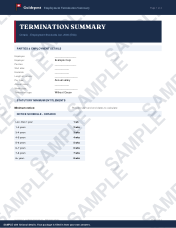
Length of employment Minimum notice Less than 3 months None 3 months–1 year 1 week 1–3 years 2 weeks 3–4 years 3 weeks 4–5 years 4 weeks 5–6 years 5 weeks 6–7 years 6 weeks 7–8 years 7 weeks 8+ years 8 weeks ESA notice = statutory minimum. Common law reasonable notice applies on top.
↑ Close this section2
Severance Pay in British Columbia
Open this section ↓↑ Close this sectionNo statutory severance pay in British Columbia
BC does not have a separate "severance pay" concept under the ESA. The ESA requires only termination pay (pay in lieu of notice). However, common law wrongful dismissal claims can result in larger settlements.
3
Group / Mass Termination
50+ employees at a single location within any 2-month period: employer must notify employees, the Minister of Labour, and any union.Open this section ↓↑ Close this section50+ employees at a single location within any 2-month period: employer must notify employees, the Minister of Labour, and any union. Notice periods scale by number of employees affected (ESA Part 8, s.64).
Official source →4
Temporary Layoff
A temporary layoff becomes a termination if it exceeds 13 weeks in any 20-week period.Open this section ↓A temporary layoff becomes a termination if it exceeds 13 weeks in any 20-week period. After that, the employee is considered terminated and is entitled to notice/pay.
↑ Close this sectionCommon Law Reasonable Notice
Common law reasonable notice applies. Courts award months of notice based on age, tenure, position, and reemployment prospects. Consult a lawyer before accepting a settlement.
5
Just Cause in British Columbia
Just cause is a high bar under BC's ESA.Open this section ↓Just cause is a high bar under BC's ESA. The employer must prove serious misconduct: theft, fraud, harassment, willful disobedience, or a fundamental breach of the employment relationship. A single isolated incident, inadequate progressive discipline, or performance concerns without documented warnings generally will not meet the standard. Continuing to employ someone after learning of misconduct ("condonation") can also defeat a just-cause claim.
↑ Close this section6
Constructive Dismissal
Open this section ↓If your employer unilaterally makes a substantial change to a fundamental term of your employment (a significant pay reduction, demotion, forced relocation, or a hostile work environment), you may be entitled to resign and claim constructive dismissal. You must act promptly after discovering the change; working under the new terms for an extended period without objection may constitute acceptance. Consult a lawyer before resigning.
↑ Close this sectionRecord of Employment (ROE)
Employer must issue the ROE within 5 calendar days after the end of the pay period in which the interruption of earnings occurs. Apply for EI at canada.ca within 4 weeks of your last day.
7
If You Were Terminated: What to Do
Open this section ↓- 1
Request your ROE if not provided within 5 days.
- 2
Apply for EI at canada.ca within 4 weeks of your last day. The 1-week waiting period is currently waived until October 9, 2027 (temporary measure). Benefits may begin sooner.
- 3
Do not sign a release or final settlement until you understand your entitlements.
- 4
Calculate your ESA notice entitlement based on your specific length of service.
- 5
Review your employment contract for any termination clause: BC courts regularly void clauses that fail to meet ESA minimums.
- 6
Consult an employment lawyer: BC has no separate severance concept, but common law often far exceeds ESA.
- 7
File a complaint with the Employment Standards Branch (free) if ESA minimums are not met.
- 8
Note: if you no longer work for the employer, an ESA complaint must be filed within 6 months of your last day of work; if you are still employed, issues are reviewed up to 1 year before the complaint. Civil wrongful dismissal claims generally within 2 years.
- 1
8
If You Are the Employer: What You Must Do
Open this section ↓- 1
Provide a written termination letter specifying the effective date of termination and whether cause is alleged.
- 2
Provide written notice or pay in lieu per ESA schedule.
- 3
Issue ROE within 5 calendar days after the end of the pay period in which the interruption of earnings occurs.
- 4
Pay final wages including accrued vacation on the next regular pay date.
- 5
Advise the employee of any rights under group benefit plans (some plans allow individual conversion within a limited window after termination).
↑ Close this sectionBritish Columbia-specific things to know
- •BC has no separate severance pay: only termination pay (notice).
- •Group termination rules apply if 50+ employees are terminated within any 2-month period.
- •2-year general limitation period for civil wrongful dismissal claims; ESA complaints within 6 months of the last day of work for former employees, or a rolling 1-year review window while still employed.
- 1
9
Common Questions
Can my employer terminate me without cause in British Columbia?Open this section ↓Can my employer terminate me without cause in British Columbia?
Yes, employers can terminate "without cause" but must provide proper notice or pay in lieu. "Without cause" does not mean without compensation. Employees terminated without cause are entitled to statutory minimums plus potentially common law notice.
What is pay in lieu of notice in British Columbia?
Instead of having you work through your notice period, your employer can end the job immediately and pay you a lump sum covering that period: that is "pay in lieu of notice". Employer provides working notice or pay in lieu. May also owe compensation for group termination (50+ employees) which requires 8 weeks' notice to government. How long the notice period must be depends on how long you worked there, and the minimum is set by the Employment Standards Act (BC).
Does British Columbia have severance pay?
BC does not have a separate "severance pay" concept under the ESA. The ESA requires only termination pay (pay in lieu of notice). However, common law wrongful dismissal claims can result in larger settlements. That is not the same as getting nothing: notice pay, or pay in lieu of it, still applies, and a common law claim can go beyond the statutory minimum.
What is "just cause" and how does it affect my payout?
Just cause is a high bar under BC's ESA. The employer must prove serious misconduct: theft, fraud, harassment, willful disobedience, or a fundamental breach of the employment relationship. A single isolated incident, inadequate progressive discipline, or performance concerns without documented warnings generally will not meet the standard. Continuing to employ someone after learning of misconduct ("condonation") can also defeat a just-cause claim.
Should I sign the severance offer right away?
Most employment lawyers advise against signing immediately. Once you sign a release, you typically cannot pursue further claims. Review the offer against your statutory minimums. If it exceeds statutory minimums, consider whether it reflects common law reasonable notice. Most employment lawyers offer free initial consultations and many work on contingency for wrongful dismissal claims.
Does my employment contract limit what I can get?
It might, but many termination clauses in employment contracts are poorly drafted and have been struck down by courts for failing to meet statutory minimums. Even if your contract has a termination clause, have a lawyer review it before assuming it limits your entitlements.
File an Employment Standards Complaint
BC Employment Standards Complaint (complete the Self-Help Kit first). Former employees file within 6 months of the last day of work or the last day of a temporary layoff. Employees still working for the employer have issues reviewed up to 1 year before the complaint is received. The Employment Standards Branch mediates before formal investigation. Filing with the employment standards office is free and does not require a lawyer.
Go to BC complaint portal →Official sources
- Employment Standards Act (BC) →
- BC ESA: Termination (gov.bc.ca) →
- BC Employment Standards Branch: Main Guide →
Facts checked September 2026
Employment Rights Package for British Columbia, $14: statutory notice minimums, employee rights summary for your province, sample termination letter, what to do next: checklist.
Get documents →↑ Close this sectionEmployment termination in other provinces
Done for you
Employment Rights Package$14
- Statutory notice minimums (ESA minimum notice + severance where applicable)
- Employee rights summary for your province
- Sample termination letter (reference: what your employer should give you)
- What to do next: checklist (EI, ROE, legal options)
Statutory notice minimums worksheet for your province
Instant download · 30-day money-back guarantee
Built by Nathan, nine years in the Canadian Army, paperwork done the hard way first.
Informational guide only. Guidepost is not a law firm. This guide explains the typical process and is not legal advice. Requirements can change. Verify current rules with the relevant government authority or a qualified professional before you act.