How to Buy a Car Privately in Saskatchewan (2026)
This page is the free Saskatchewan guide. No sign-in. Read on.
Facts checked September 2026 · See what changed · How we check
Private car sales in Saskatchewan can save you thousands, but without a dealer warranty, due diligence is on you. This guide covers lien checks, what to inspect, and exactly how to register the car after purchase.
1
Step 1: Check for Liens
Open this section ↓A lien means the seller borrowed money against the car and hasn't paid it back. If you buy a car with an undisclosed lien, the lender can legally repossess it from you, even though you paid in good faith. This is the single most important thing to do before buying.
Run a lien search at Saskatchewan ISC PPSA Search
Search by VIN. Takes 5 minutes. Costs under $15 in most provinces.
Search Saskatchewan ISC PPSA Search →The Saskatchewan lien search page explains how to run the search yourself and what a result does and does not tell you.
↑ Close this section2
Step 2: Inspect the Vehicle
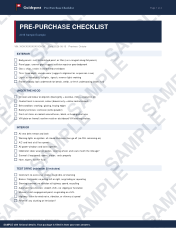
Private sales are "as-is": once you hand over money, what you have is what you get.Open this section ↓Private sales are "as-is": once you hand over money, what you have is what you get. Always inspect before you buy. Consider hiring a licensed mechanic for a pre-purchase inspection ($100–$200 at most shops).
↑ Close this sectionExterior
- □Body panels: look for rust, mismatched paint, or filler (run a magnet along panels)
- □Panel gaps: uneven gaps suggest collision repair
- □Glass: chips, cracks, delamination
- □Tires: tread depth (insert a quarter: if you can see the top of the crown, replace soon), uneven wear
- □Lights: all headlights, taillights, signals working
Under the Hood
- □Oil: dipstick level and colour (black/gritty = overdue, milky = coolant leak)
- □Coolant level and colour in reservoir
- □Belt condition: cracking, fraying
- □Battery terminals: corrosion
- □Look for fresh oil or coolant around hoses and the engine block (leak signs)
Interior
- □Seat belts: retract and latch properly
- □Warning lights: turn key to ON before starting: all lights should illuminate then go off
- □AC and heat: both work at all settings
- □Windows: all roll up and down
- □Odometer vs. wear: does the wear on pedals, steering wheel, and seats match the mileage?
Test Drive
- □Cold start: listen for knocking or rough idle
- □Brakes: firm pedal, no pulling to one side, no grinding
- □Steering: no play, no vibration at highway speed
- □Transmission: smooth shifts (automatic) or clean clutch engagement (manual)
- □Listen for: clunking over bumps (suspension), whining (wheel bearings), rattles
3
Step 3: Review the Documents
Open this section ↓- ✓
Vehicle registration certificate
Confirm the seller's name matches their ID. The name on the registration must match the person signing the bill of sale.
- ✓
Bill of sale
Get a signed bill of sale with the VIN, sale price, date, and both parties' full names and addresses. Keep your copy.
- ✓
Vehicle history report (optional but recommended)
CARFAX Canada (carfax.ca) sells a vehicle history report showing accident and damage history, odometer readings, service records, unfixed safety recalls, and previous ownership. Its more expensive tier adds a Canada-wide lien search. Check current pricing on carfax.ca. Some provinces also have free VIN checks (Saskatchewan SGI, for example).
- ✓
4
Step 4: Get Insurance Before You Drive
Open this section ↓You need insurance before you can drive the vehicle home.Contact your insurer before the purchase meeting to add the vehicle to your policy or get temporary coverage. In Saskatchewan, SGI provides insurance. Arrange before registering.↑ Close this section5
Step 5: Register the Vehicle at SGI (Saskatchewan Government Insurance)
Open this section ↓- 1Complete SGI's standard Bill of Sale form (downloadable from sgi.sk.ca): include date, full names and contact info, VIN, year/make/model, sale price, and signatures from both parties.
- 2Sign the Transfer of Ownership section on the back of the Saskatchewan Certificate of Registration.
- 3Remove your licence plates. They are associated with you, not the vehicle.
- 4If you won't be replacing the vehicle, return the plate to your local SGI office or motor licence issuer to be destroyed.
- 5The buyer takes the signed Transfer of Ownership and bill of sale to an SGI motor licence issuer to register the vehicle. SGI publishes no "register within X days" rule, but the vehicle must be registered before it is driven.
Saskatchewan-specific things to know
- •PST is on the greater of the sale price or the average wholesale value, not just the stated price.
- •SGI offers a free VIN search that buyers can use to check damage claims history and confirm no PST is owing. Recommend this to buyers.
- •SGI sets no fixed "register within X days" deadline after a private purchase, but a vehicle on a public road must be registered and insured, so the buyer must register it before driving it. A permit covers driving an unregistered vehicle to an issuer.
- •SGI recognizes a 7-day grace period when you sell a vehicle and replace it: the plate can move from the sold vehicle to the replacement within 7 days of the replacement’s bill-of-sale date, provided the old vehicle was sold and the replacement is a similar type and class with a gross vehicle weight no greater than the vehicle it replaces. It applies to registration and insurance, and is recognized in Saskatchewan only.
- •If the vehicle was last registered outside Saskatchewan, the buyer will need a safety inspection before registration.
What happens if you miss the registration deadline in Saskatchewan
Saskatchewan does not publish an official day-count for this, so there is no stated deadline to miss and no published penalty. Contact SGI (Saskatchewan Government Insurance) for the current requirement.
Official source: SGI (Saskatchewan Government Insurance) →Filling in your own half
If the seller buys the package with Sign Together, where each of you signs online from your own device through a private link, they can send you that link and you type your own details in yourself rather than reading them out in a driveway. You both end up with the same finished file. What the seller sees →
↑ Close this sectionReceiving a vehicle as a family gift?
Write a Letter of Gift: an unnumbered written letter stating the relationship (per SGI / Bulletin PST-78). There is no specific form number. The vehicle must be Saskatchewan tax-paid. Siblings qualify in Saskatchewan.
6
Common Questions
How is transfer tax calculated in Saskatchewan?Open this section ↓How is transfer tax calculated in Saskatchewan?
In Saskatchewan, transfer tax is calculated on the higher of the actual sale price or the average wholesale book value. The registry checks both. You can't save on tax by understating the price.
What if the VIN doesn't match the registration?
Walk away. The VIN on the dash, the door jamb sticker, and the registration must all match. A mismatch can indicate a stolen vehicle or a tampered plate.
Is a private sale "as-is"?
Generally yes. Private sellers are not bound by dealer warranty laws. However, sellers cannot actively misrepresent the vehicle. If a seller tells you the car has never been in an accident and it has, that's misrepresentation and you may have legal recourse.
What's the safest way to pay?
Bank draft or certified cheque for large amounts. They cannot bounce. For e-transfer, confirm funds are in your account before handing over the keys. Never pay cash for a large vehicle purchase unless you can verify the seller's identity thoroughly.
↑ Close this sectionGet your complete Saskatchewan buyer's package: checklist, lien guide, bill of sale, registration steps.
Get package →
Our lien search service is not available for Saskatchewan yet. You can search the registry yourself here: Saskatchewan ISC PPSA Search.
When you are ready
Buyer's checklist & PPSA package$12
- Lien check guide + every buyer step for your province
- Helps avoid buying a vehicle with an outstanding loan
Instant download · 30-day money-back guarantee
Built by Nathan, nine years in the Canadian Army, paperwork done the hard way first.
Official sources
Facts checked September 2026
Also see: buying a car in other provinces
Informational guide only. Guidepost is not a law firm. This guide explains the typical process and is not legal advice. Requirements can change. Verify current rules with the relevant government authority or a qualified professional before you act.